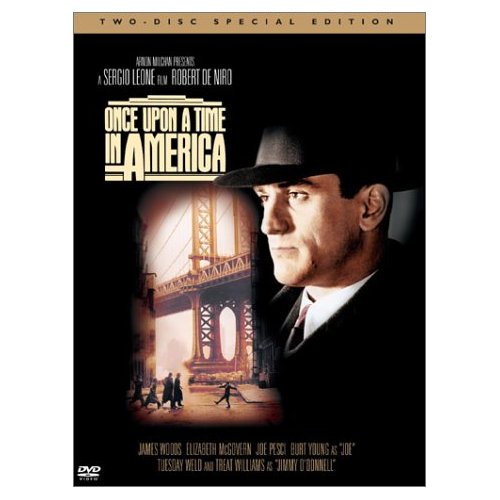
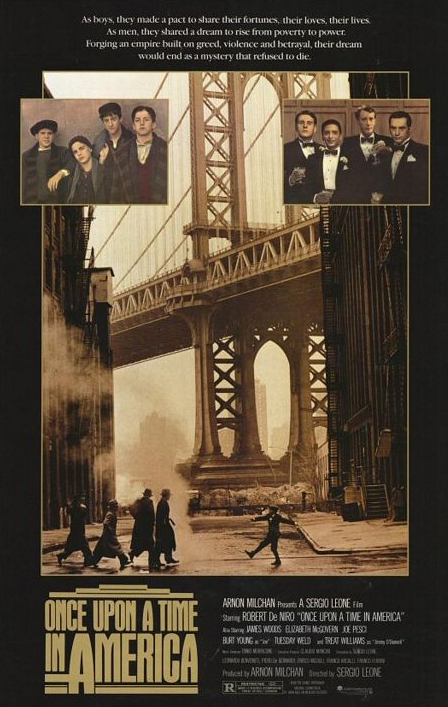
This iconic image is from Sergio Leone's classic 1984 film "Once Upon A Time In America", which starred Robert DeNiro.
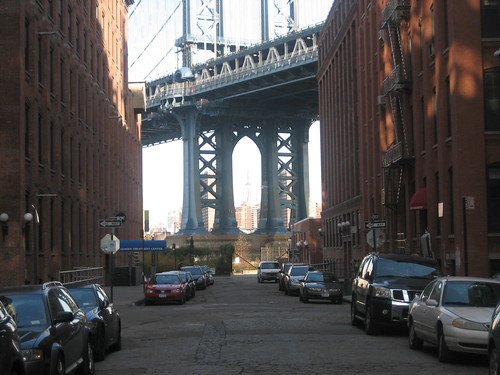
The view down Washington Street in Brooklyn's DUMBO remains largely unchanged to this day - minus the debris.
The Empire State Building is visible through the uprights of the bridge if you move slightly to your left in the street, and often the street is closed for film and music video shoots.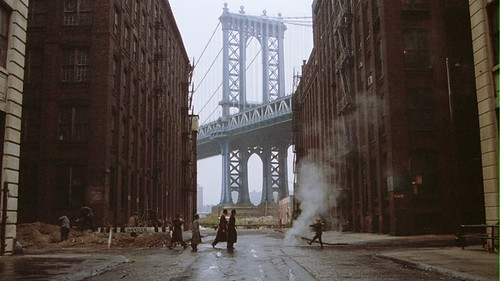
Showing posts with label Manhattan Bridge. Show all posts
Showing posts with label Manhattan Bridge. Show all posts
Saturday, December 15, 2007
Manhattan Bridge in the Movies

Saturday, November 17, 2007
The Manhattan Bridge - Update
Oooh - Sexy!
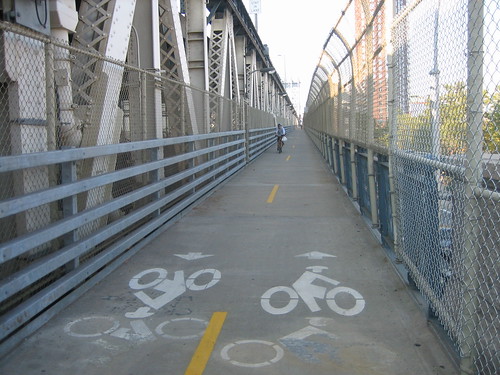
Yes, It's the bicycle specific, newly opened, bike lane on the Manhattan Bridge.
Check it out. Bike icons in both lanes.
Of course, I did see about 5 people on foot on the North Path, but who cares.
The approach on both sides is suicidal and takes you through some of the worst streets to cycle on, but it's so nice to ride across the river without fear of hitting or being hit by random tourists, kids, sightseers or joggers on the Brooklyn Bridge Footpath.
On the Manhattan side, the bike path entrance is at Chrystie Street on the left hand (North) side when facing the bridge from Canal Street.
The Brooklyn entrance to the path is a lovely new ramp at Jay and Sands Streets.
The approach to this is also crazy if you aren't used to riding in traffic - and hard to find if you don't know exactly where it is.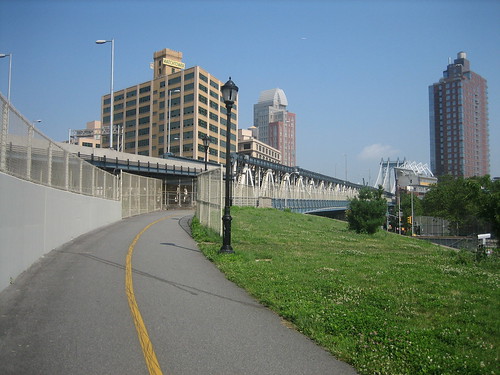
The stairs to the pedestrian path are on the Jay Street side and the ramp is on the Sands Street side.
The intersection of Jay and Sands is right in the middle of the traffic pattern leading from the BQE to both the Brooklyn and Manhattan Bridges, so you need to be alert, but if you are coming from Downtown Brooklyn the Adams Street approach (AKA Brooklyn Bridge Blvd) is completely empty of car traffic.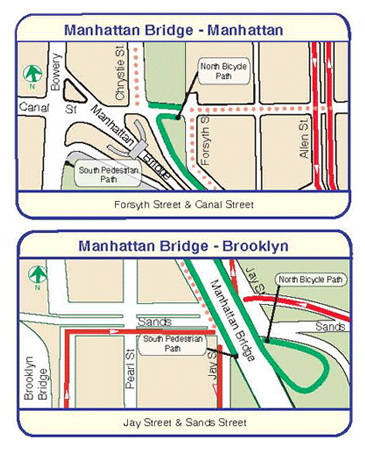
Tuesday, October 2, 2007
The Manhattan Bridge
Only 2,020 more to go...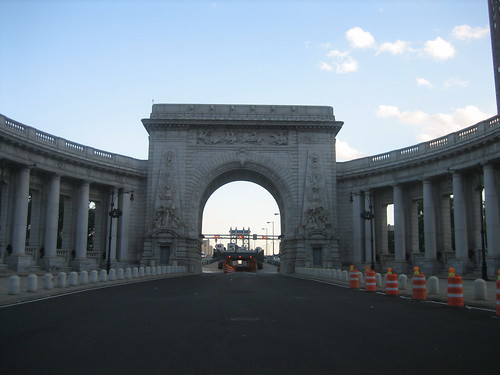
The Upper Deck Approach from the Manhattan side.
Spans - Manhattan-Brooklyn, East River
Canal Street, Chinatown to Flatbush Avenue, Downtown Brooklyn.
The Manhattan Bridge was the last of the classic three East River Crossings to be completed. It opened to traffic on New Year's Eve of 1909, and has been plagued by structural issues almost from day one.
When fully utilized, the bridge has the capacity to carry four lanes of traffic on its upper level, three lanes of reversing traffic on its lower level, four subway tracks and two pedestrian pathways, one of which was earmarked as a bicycle only route. 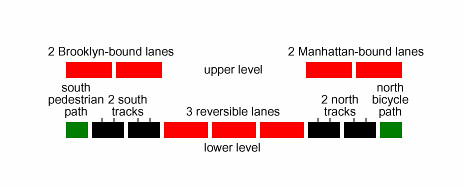
I've never actually seen this, because the bridge has been under continuous renovation since before I can remember.
(cross section taken from the Wikipedia entry for the Manhattan Bridge)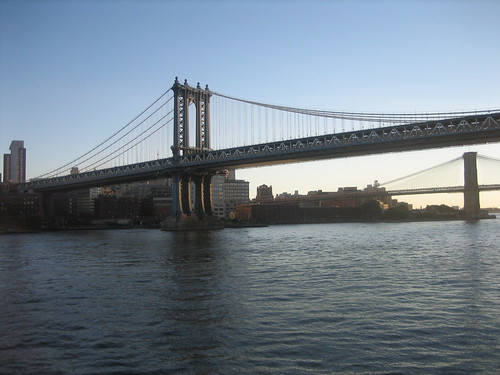
Apparently, the mysterious northern bike path is now open.
Important Notice
New York City Department of Transportation Division of Bridges
Rehabilitation of the Manhattan Bridge
"On Monday, August 6, 2007, the New York City Department of Transportation Division of Bridges will reopen the north bikeway of the Manhattan Bridge. The north bikeway has been closed since October 2006 to complete various construction tasks in association with the rehabilitation of the lower roadway of the bridge as well as to ensure and maintain public safety during the rehabilitation. Once the bikeway reopens the south walkway will revert to pedestrian use only."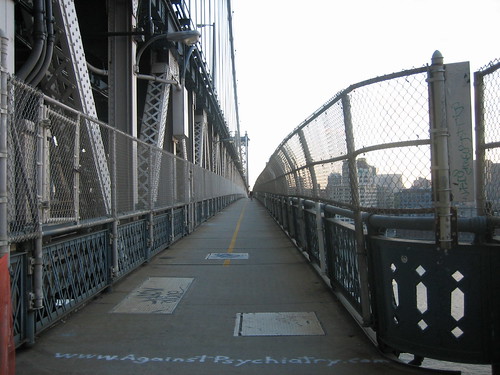
This is the South Walkway. (with a bicyclist in the distance)
Type of bridge: Suspension
Opened to traffic: December 31, 1909
Length of main span: 1,470 feet
Length of side spans: 725 feet
Length, anchorage to anchorage: 2,920 feet
Total length of bridge and approaches: 6,855 feet
Number of decks: 2 decks
Number of traffic lanes: 7 lanes (4 upper, 3 lower)
Number of subway tracks: 4 tracks
Height of towers above mean high water: 322 feet
Clearance at center above mean high water: 135 feet
Number of cables:
Diameter of each of four cables:
Length of each of four cables:
Structural material:
Tower material:
Deck material:
Cost of original structure: $31,000,000
Bridge statistics from nyc roads.com
View Larger Map
Wednesday, September 19, 2007
The Brooklyn Bridge
2,026 to go...
No other bridge could be Number 1 on the list.
Span - Manhattan to Brooklyn across the East River
The Brooklyn Bridge, one of New York City’s most celebrated architectural wonders and arguably the most influential bridge in American history, was completed in 1883. Designed by John Augustus Roebling and completed by his son Washington Roebling, the Brooklyn Bridge was, at the time of its completion, the longest suspension bridge in the world, with a main span of 1595.5 feet.
It received landmark status in 1964 and is the oldest bridge that is open to passengers or vehicles.
The Brooklyn Bridge had 137,563 vehicle crossings on an average weekday in 2004.
Quoted from: Transportation Alternatives, The DOT, and
the Wikipedia entry for The Brooklyn Bridge
Pedestrian and Bicycle access to the Brooklyn Bridge -
Access to the bridge has improved markedly over the last few years.
The city recently added much needed signs and lighting to the Cadman Plaza Stairway entrance that is heavily used by tourists and pedestrians.
Last year, they added a two-way protected bike lane on Tillary Street to facilitate access to the bridge from the Downtown and Heights neighborhoods.
The Adams Street bike path is still basically unusable due to the fact that the Marriott allows livery cab drivers to park all along the length in front of the hotel.
The Manhattan entrance is easy to find, but hard to legally ride to on a bicycle. The safest thing to do is dismount and walk from the corner of Centre and Chambers Streets to the pedestrian entrance, due to traffic and crowds, but very few cyclists do this.
The pathway across the bridge is separated into two distinct lanes; the southern lane is for pedestrians, the northern lane for cyclists. These are clearly marked with icons, but are largely ignored by tourists who don't know any better.
Manhattan entrance: Park Row and Centre Street, across from City Hall Park.
Brooklyn entrance: Stairs under the overpass at Cadman Plaza East and Prospect Streets, or ramp to Tillary and Adams Streets.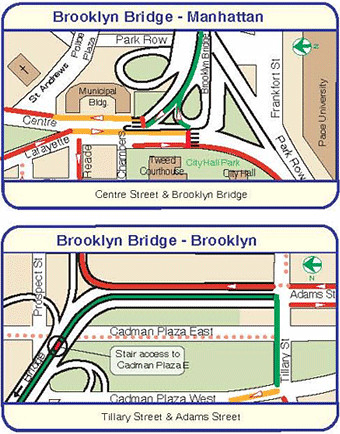
Cyclists at dawn crossing the Brooklyn Bridge during the 2007 NYC Century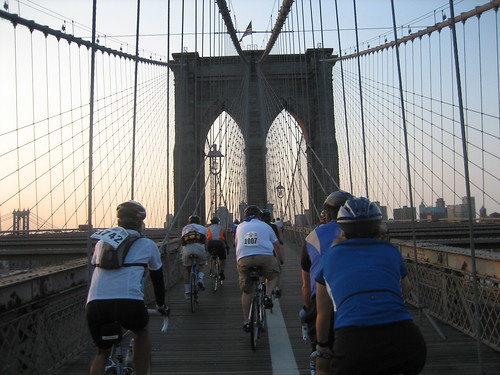
Sunrise over the Manhattan Bridge from the pedestrian walkway of the Brooklyn Bridge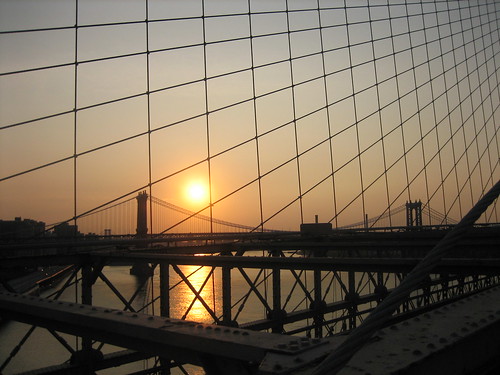
Type of bridge:Suspension
Construction started:January 3, 1870
Opened to traffic:May 24, 1883
Length of main span:1,595 feet, 6 inches
Length of side spans:930 feet
Length, anchorage to anchorage:3,455 feet, 6 inches
Total length of bridge and approaches:6,016 feet
Width of bridge:85 feet
Number of traffic lanes:6 lanes
Number of cables:4 cables
Height of towers above mean high water:276 feet, 6 inches
Clearance at center above mean high water:135 feet
Length of each of four cables:3,578 feet, 6 inches
Diameter of each cable:15¾ inches
Number of wires in each cable:5,434 wires
Total length of wires:14,060 miles
Total masonry in towers:85,159 cubic yards
Weight of suspended structure:6,620 tons
Total weight of bridge:14,680 tons
Cost of original structure:$15,100,000
Bridge facts from NYCRoads.com
View Larger Map
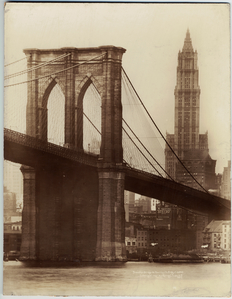
Tuesday, September 18, 2007
Frequently Asked Questions
NYC Bridge Information from the DOT
Q: How many bridges are there in New York City? How many are under the jurisdiction of DOT?
A: There are 2,027 bridges in New York City. DOT's Division of Bridges is responsible for the design, construction, maintenance and operation of the 787 bridges (including 6 tunnels) and 67 culverts presently under the jurisdiction of the Department of Transportation.
Q: Who other than DOT operates bridges and tunnels in New York City?
A:MTA Bridges and Tunnels (formerly known as the Triborough Bridge and Tunnel Authority) operates the following structures: Bronx-Whitestone Bridge, Brooklyn-Battery Tunnel, Cross Bay Veterans Memorial Bridge, Henry Hudson Bridge, Marine Parkway-Gil Hodges Memorial Bridge, Queens Midtown Tunnel, Throgs Neck Bridge, Triborough Bridge, Verrazano-Narrows Bridge. The MetroNorth Railroad and the Long Island Railroad, both subsidiaries of the MTA, operate bridges and tunnels on their rail lines.
The Port Authority of New York and New Jersey operates the following bridges and tunnels: Bayonne Bridge, George Washington Bridge, Goethals Bridge, Holland Tunnel, Lincoln Tunnel, Outerbridge Crossing.
Q: Which bridge carries the largest amount of daily traffic?
A: The Queensboro Bridge. On an average weekday in 2004, some 180,369 vehicles crossed this celebrated cantilevered bridge between 59th Street in Manhattan and Long Island City in Queens. The Brooklyn Bridge had 137,563 vehicle crossings, the Williamsburg Bridge had 110,528 and the Manhattan Bridge had 79,129.
Q: How many New York City bridges are classified as historic landmarks?
A: As of January 1, 1998, ten bridges in New York City had been awarded some degree of landmark status. They include seven that are under the jurisdiction of the New York City Department of Transportation: the Brooklyn, Manhattan, Queensboro, Washington, University Heights, Carroll Street and Macombs Dam Bridges. The three landmarked bridges not operated by DOT are the George Washington Bridge (Port Authority of New York and New Jersey), Highbridge (NYC Department of Environmental Protection), and Hell Gate Bridge (Amtrak).
Q: What was the first bridge built in New York City? What is the oldest bridge still standing in New York City?
A: New York City’s first bridge, known as the King’s Bridge, was constructed in 1693. Fitted with stone abutments and a timber deck, it spanned Spuyten Duyvil Creek between Manhattan and the Bronx. It was demolished in 1917. The oldest bridge still standing in New York City is Highbridge, which spans the Harlem River between Manhattan and the Bronx; it was built in 1843. Highbridge is an aqueduct that carries a water main; it is not accessible to passengers or vehicles. The oldest bridge that is open to passengers or vehicles is the Brooklyn Bridge, which opened in 1883.
Q: When were the East River Bridges built? Which of the East River Bridges is the longest?
A: The four major bridges over the East River were constructed within four decades, from the start of construction on the Brooklyn Bridge in January 1870 to completion of the Manhattan Bridge in December 1909. The Brooklyn Bridge, one of New York City’s most celebrated architectural wonders and arguably the most influential bridge in American history, was completed in 1883. Designed by John Augustus Roebling and completed by his son Washington Roebling, the Brooklyn Bridge was, at the time of its completion, the longest suspension bridge in the world, with a main span of 1595.5 feet. The Williamsburg Bridge, with its 35-story steel towers, is the largest of the three suspension bridges that span the East River. When it was completed in 1903, it became the longest suspension bridge in the world, with a main span that is 1,600 feet long.
The two-decked Queensboro Bridge is one of the greatest cantilever bridges in the history of American bridge design. It was completed in March 1909. The last of the great bridges constructed across the East River, the Manhattan Bridge, opened on traffic on December 31, 1909.
Q: How many movable bridges does New York City operate?
A: There are 25 movable bridges in New York City, including two retractile bridges, seven swing bridges, four lift bridges, and twelve bascule (drawbridge) bridges.
Q: How many bridges connect Manhattan to other Boroughs or States?
A: There are 21 major bridges that connect to the island of Manhattan.
Manhattan Only - In order from West to East
(The Hudson to the Harlem to the East Rivers) and North to South.
George Washington Bridge
Spuyten Duyvil Rail Bridge
Henry Hudson Bridge
Broadway Bridge
University Heights Bridge
Washington Bridge
Alexander Hamilton Bridge
Highbridge
Macombs Dam Bridge
145th Street Bridge
Madison Avenue Bridge
Park Avenue Bridge
Third Avenue Bridge
Willis Avenue Bridge
Triborough Bridge
Wards Island Pedestrian Bridge
Roosevelt Island Bridge
Queensboro Bridge
Williamsburg Bridge
Manhattan Bridge
Brooklyn Bridge
View Larger Map
Subscribe to:
Posts (Atom)